
Almost every fabrication project in Lahore starts with the same question: mild steel or stainless steel? Both are iron-based, both can be welded into gates, railings, grills, and structural frames, and both show up constantly in Rauf Steel Works’ custom fabrication projects. But the two materials behave very differently once they’re actually installed and exposed to weather, load, and years of daily wear — and picking the wrong one for the job is one of the most common regrets property owners run into a year or two after installation.
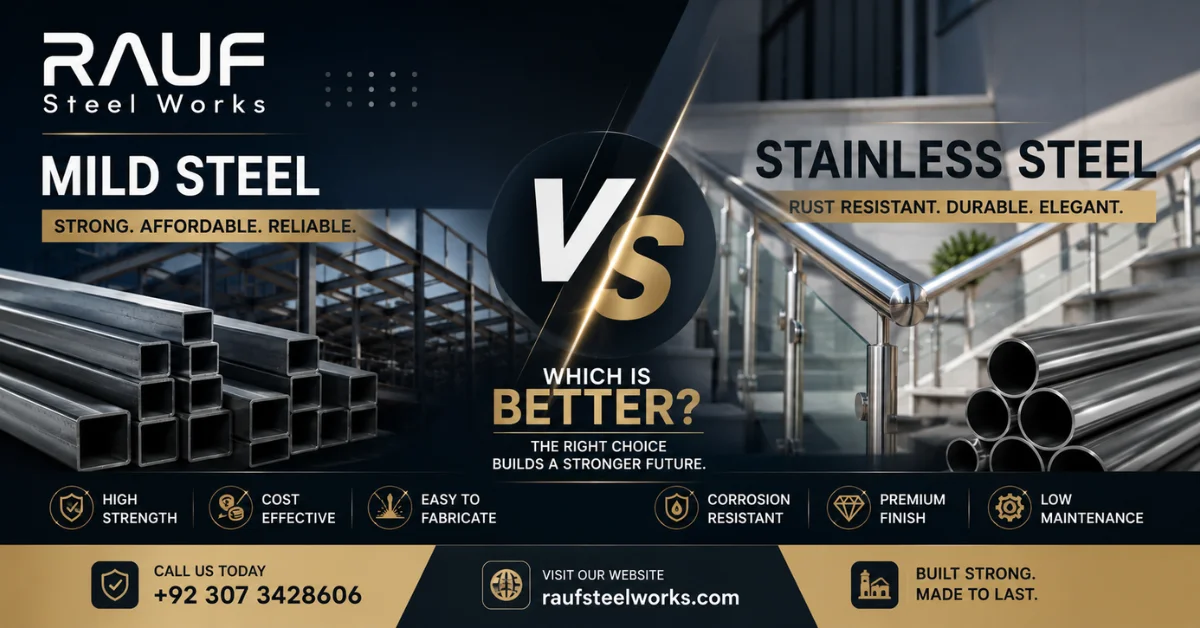
This guide compares mild steel (MS) and stainless steel (SS) side by side — composition, strength, corrosion resistance, cost, and appearance — so you can choose the right one for your specific project instead of guessing based on price alone.
What Is Mild Steel?
Mild steel, also called low-carbon steel, is an alloy of iron and a small amount of carbon — typically under 0.3% — along with trace elements like manganese and silicon. According to a detailed materials comparison from MFG Shop, this low carbon content is exactly what makes mild steel soft, easy to shape, and simple to weld, which is why it’s the default material for most of the MS works Rauf Steel Works fabricates — gates, structural frames, and general custom pieces. The trade-off is that mild steel has no chromium content, which is the one ingredient that actually prevents rust.
What Is Stainless Steel?
Stainless steel is also an iron-based alloy, but it contains a minimum of roughly 10.5% chromium, along with varying amounts of nickel and other elements depending on the grade. As ThyssenKrupp Materials explains, that chromium content reacts with oxygen in the air to form a thin, self-repairing chromium oxide layer on the surface — this is what gives stainless steel its corrosion resistance and its recognizable bright, silvery finish. It’s the material behind most of the SS works and modern fittings Rauf Steel Works produces for clients who want a polished, low-maintenance finish.
Mild Steel vs Stainless Steel: Side-by-Side Comparison
| Property | Mild Steel (MS) | Stainless Steel (SS) |
| Corrosion resistance | Low — rusts without protective coating | High — chromium oxide layer resists rust |
| Strength & hardness | Moderate, softer, easier to shape | Higher tensile strength and hardness |
| Weldability & fabrication | Very easy to cut, bend, and weld | More demanding to fabricate, needs skilled welding |
| Maintenance | Needs priming and repainting every 2–3 years | Minimal — occasional cleaning |
| Appearance | Dull, matte grey; needs paint for finish | Bright, polished, or brushed silver finish |
| Relative cost | Lower material cost | Higher, due to chromium and alloying elements |
| Typical use | Gates, structural frames, railings, grills | Modern railings, fittings, coastal or humid-zone work |
This comparison lines up with what KDM Fabrication’s material guide also notes — stainless steel’s longer service life comes directly from its corrosion resistance and higher tensile strength, while mild steel’s main advantages are cost and how easily it can be worked into complex shapes.
Strength and Durability
Stainless steel generally has a higher tensile strength than mild steel, meaning it resists bending, warping, and deformation under load more effectively — a point confirmed by Aluminium Warehouse’s steel comparison guide. For structural work like stairs and load-bearing railings, this extra strength can matter. That said, mild steel is far from weak — with correct gauge selection and proper weld penetration, it comfortably handles the loads involved in most residential and commercial fabrication work in Lahore, which is why it remains the standard choice for the majority of gates and structural frames.
Corrosion Resistance: The Real Deciding Factor
For most Lahore fabrication projects, corrosion resistance is the property that actually decides which material makes sense. As Prime Fabrication’s comparison guide explains, mild steel’s chromium-free composition means it oxidizes and rusts once exposed to moisture, gradually weakening the metal over time if left untreated. Stainless steel’s chromium oxide layer, by contrast, is self-healing — if the surface gets scratched, it re-forms on its own when exposed to oxygen again. In a climate like Lahore’s, with a humid monsoon season every year, this is exactly why gates and railings fabricated in MS need proper anti-rust priming and a weather-grade paint finish, while SS pieces largely don’t.
Cost Comparison
Mild steel is consistently the more affordable option, both in raw material cost and fabrication labor, since it’s easier and faster to cut, bend, and weld. Stainless steel costs more upfront because of its chromium and nickel content, and it also takes more skill and time to fabricate properly. Over the life of the piece, though, the cost gap narrows — a well-maintained MS gate needs repainting every few years, while an SS gate needs almost no ongoing spend beyond occasional cleaning. When requesting a quote from Rauf Steel Works, it’s worth asking for material and labor costs broken down separately for both options so you can compare the real long-term value, not just the sticker price.
Appearance and Finish
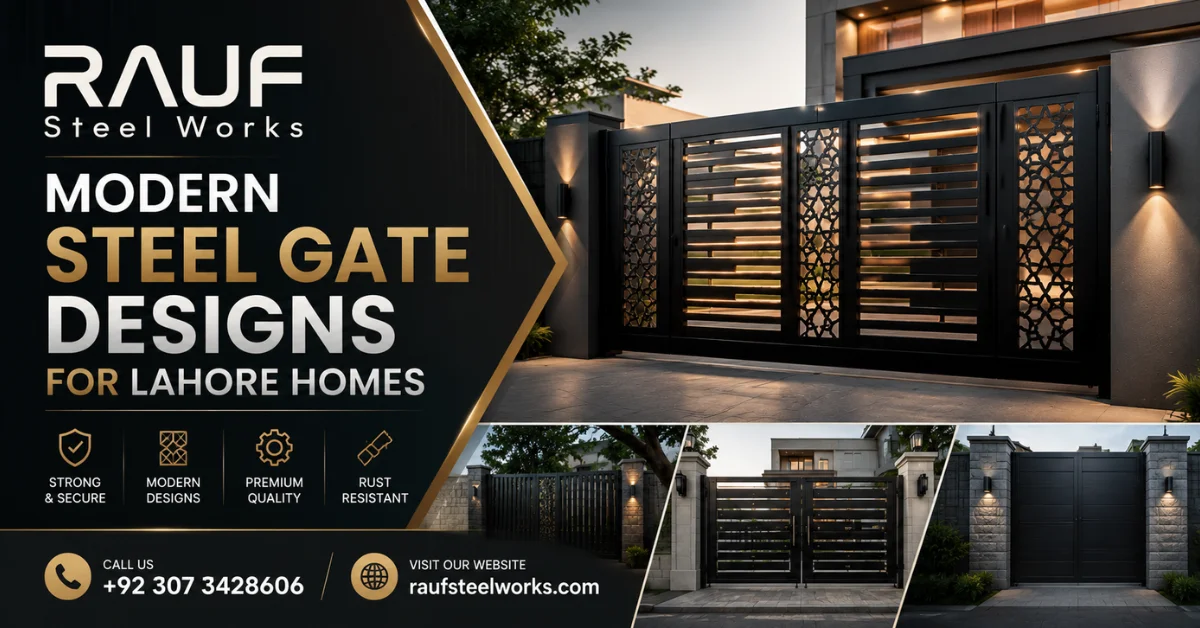
Mild steel has a dull, matte grey look in its raw state and needs paint or powder coating to achieve any real finish — but that also means it can be painted in virtually any color to match a property’s design. Stainless steel has a naturally bright, silvery appearance that can be polished to a mirror shine or brushed for a softer matte-metal look, without needing paint at all. For homeowners chasing a specific modern, minimal aesthetic, SS often wins on looks alone — which is part of why it’s increasingly common in modern steel gate designs for newer Lahore homes.
Which Should You Choose?
Choose mild steel if: you want the most cost-effective option, the project involves complex custom shapes or patterns, and you’re comfortable with periodic repainting to maintain the finish. This covers the majority of gates, structural frames, and general fabrication work.
Choose stainless steel if: low maintenance is a priority, the piece will face heavy weather exposure, or you specifically want a bright, modern, low-upkeep finish — common for premium railings, fittings, and architectural accents.
For many projects, the honest answer is a mix of both — an MS structural frame for cost efficiency, paired with SS fittings or accents where visibility and low maintenance matter most. This is a conversation worth having during the initial consultation stage of any fabrication project, before material decisions are locked in.
Common Mistakes When Choosing Between MS and SS
- Choosing based on price alone without factoring in weather exposure and long-term maintenance cost.
- Using mild steel for a piece with heavy corrosion exposure and skipping proper priming to save on the quote.
- Assuming stainless steel is always the “better” choice, when mild steel is often the more practical option structurally and financially.
- Not asking which stainless steel grade is being used — not all SS grades offer the same level of corrosion resistance.
Final Thoughts
Neither material is universally “better” — mild steel and stainless steel are suited to different priorities. Mild steel offers strength, workability, and affordability, provided it’s properly primed and painted. Stainless steel offers superior corrosion resistance and a low-maintenance, modern finish, at a higher upfront cost. The right choice comes down to your budget, how much maintenance you’re willing to take on, and how the piece will actually be exposed to Lahore’s weather.
If you’re planning a gate, railing, or custom fabrication project and aren’t sure which material fits best, get in touch with Rauf Steel Works for a free consultation — the team can walk you through MS and SS options side by side for your specific project.
FAQs
Is stainless steel always better than mild steel?
Not necessarily. Stainless steel offers better corrosion resistance and needs less maintenance, but mild steel is more affordable, easier to fabricate into complex shapes, and performs just as well long-term when properly primed and painted.
Which is stronger, mild steel or stainless steel?
Stainless steel generally has higher tensile strength, but mild steel is strong enough for the vast majority of residential and commercial fabrication work when the correct gauge and welding technique are used.
Does mild steel rust faster than stainless steel in Lahore’s weather?
Yes. Mild steel has no chromium content and will rust when exposed to Lahore’s monsoon humidity unless it’s properly primed and painted. Stainless steel’s chromium oxide layer resists this naturally.
Is stainless steel worth the extra cost for a home gate?
It depends on your priorities. If low maintenance and a modern polished finish matter most, SS is worth the premium. If budget and design flexibility matter more, a properly finished MS gate performs just as reliably.
Can mild steel and stainless steel be combined in one project?
Yes, and it’s a common approach — using MS for structural framing where cost efficiency matters, combined with SS for fittings, accents, or areas that need extra corrosion resistance.