
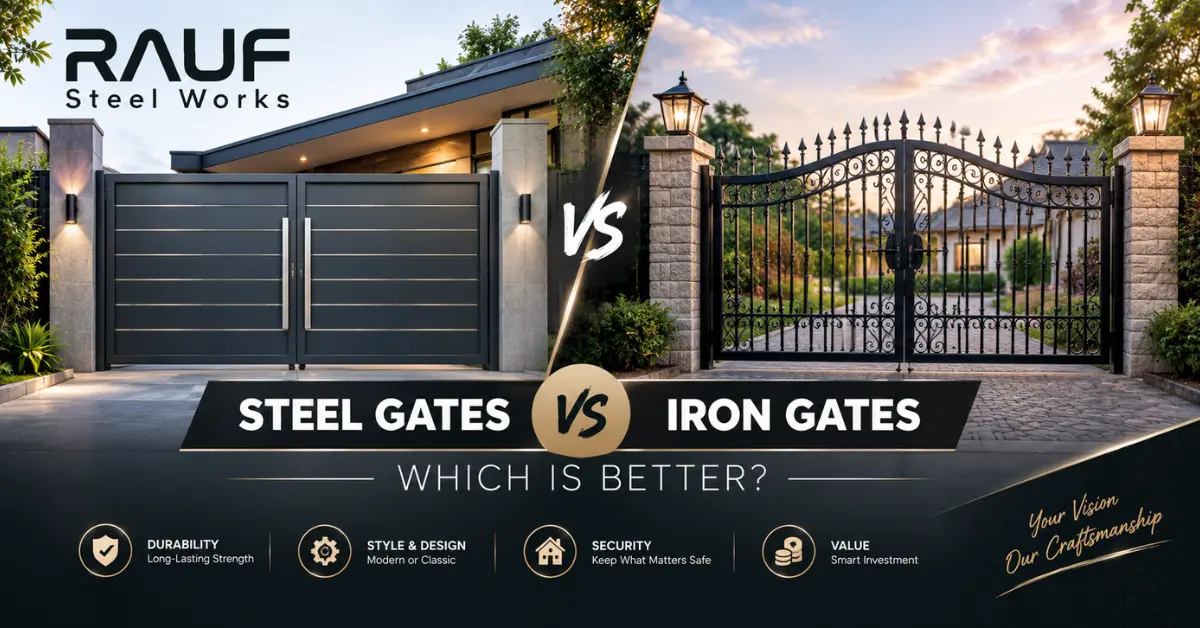
Ask ten people in Lahore for an “iron gate” and most will mean a gate made of steel. The word “iron” stuck from older days. The metal changed. This mix-up makes steel gates vs iron gates a confusing choice for many homeowners.
The short answer is simple. For most homes, a well-finished steel gate is the practical pick. True iron gates still exist, but they are rare and suit special cases. At Rauf Steel Works, the team builds gates in mild steel (MS) and stainless steel (SS). This guide explains the real difference, so you can choose with confidence. You can also browse the full list of services first.
Steel Gates vs Iron Gates: What Is the Difference?
In steel gates vs iron gates, the core fact is this: steel is iron with a controlled amount of carbon. So every steel gate contains iron. The real question is which type of iron-based metal the gate uses. There are three common answers.
Cast Iron
Cast iron holds a lot of carbon. A metallurgy text from Mt. Hood Community College puts it at 1.8 to 4 percent. The same source says cast iron tends to be brittle. That is a poor trait for a gate that swings, slams, and takes the occasional knock.
Wrought Iron
Wrought iron is the “classic” iron. Britannica says it usually contains less than 0.1 percent carbon and 1 or 2 percent slag. Britannica also notes that its use in the 20th century has been mainly decorative. Smiths once hammered it into shape by hand.
Mild Steel
Mild steel is the metal behind most gates sold today. A steel supplier’s guide to wrought iron says true wrought iron now survives mostly as a misnomer. It adds that makers form most components sold under that name from mild steel. Treat that as an industry view, since a supplier wrote it. It still matches what you see in the market.
Comparison: Cast Iron, Wrought Iron and Mild Steel
| Factor | Cast iron | Wrought iron | Mild steel |
| Carbon content | About 1.8–4% | Under 0.1%, plus 1–2% slag | Low; carbon is the main alloying element |
| Behaviour or use | Tends to be brittle | Mostly decorative use today | Malleable and widely used in general fabrication |
| Typical use | Pipes, machine parts | Ornamental work | Gates, railings, frames, grills |
| Availability for gates | Rare | Rare; often a label for mild steel | Standard choice |
Sources: Mt. Hood Community College, Britannica, Tampa Steel, ThyssenKrupp Materials.
Why Mild Steel Wins the Steel Gates vs Iron Gates Choice
In steel gates vs iron gates, mild steel stands out for malleability. ThyssenKrupp Materials notes that it is much more malleable than stainless steel. Fabricators use it widely. That makes it easy to cut, bend, and weld into the exact shape of your driveway opening.
A mild steel gate also gives you design freedom. Fabricators can build plain panels, jali patterns, or curved tops from the same material. You can see ideas in our guide to modern steel gate designs for Lahore homes.
Rust: The Big Issue in Steel Gates vs Iron Gates
Steel’s weak point is rust. ThyssenKrupp explains that mild steel lacks a protective chromium oxide layer. The iron reacts with moisture in the air and forms rust. The company adds that mild steel needs further processing, such as galvanising, for a protective surface.
Lahore’s monsoon humidity makes this point matter. A bare steel gate will rust. A well-finished one resists it far better. The finish makes the difference.
Finishes That Protect a Steel Gate
- Primer and paint: The lowest-cost option, but it needs repainting over time.
- Galvanizing: A zinc coating that protects the steel underneath.
- Duplex system: Galvanizing plus paint or powder coating. The American Galvanizers Association says a duplex coating lasts 1.5 to 2.5 times as long as each coating alone.
The galvanizing industry publishes that figure, so treat it as a best case. Ask your fabricator which system they use and why.
How to Care for a Steel Gate
Good care keeps any gate looking new and working smoothly. The routine is short.
- Wash the gate with soapy water and a soft brush, so dirt does not trap moisture.
- Look for chips in the paint, especially near the bottom and the joints.
- Sand off early rust, then touch up with primer and paint.
- Oil the hinges and check that the gate swings freely.
- Repaint the whole gate when the finish starts to fade.
Small repairs done early cost far less than a full repaint. Welding repair can also restore a bent or damaged section without replacing the whole gate.
When to Choose Stainless Steel
Stainless steel resists rust on its own. It costs more, but it needs very little upkeep. It suits homes near heavy moisture or owners who want a low-maintenance, modern finish. Our comparison of mild steel vs stainless steel covers the trade-offs in detail.
Steel Gates vs Iron Gates: Which One Should You Choose?
Match the metal to your priorities in the steel gates vs iron gates decision.
- Choose mild steel if you want the best value, a custom design, and you accept occasional repainting.
- Choose galvanized or duplex-coated steel if the gate faces weather every day and you want a longer life.
- Choose stainless steel if low upkeep matters most and the budget allows it.
- Choose true wrought or cast iron only for heritage restoration, where a period look is the goal.
What to Ask Before You Order Steel Gates or Iron Gates
A clear quote prevents most disputes. Ask the fabricator to write down:
- The exact metal and thickness of the frame.
- The finish: primer, paint, powder coat, or galvanizing.
- The hinges, lock, and fittings.
- The delivery and installation dates.
Rauf Steel Works follows four steps: consultation, planning, execution, and delivery. You can book a consultation to discuss your gate.
Common Steel Gates vs Iron Gates Mistakes to Avoid
- Trusting the word “iron.” Ask what metal the gate really uses.
- Skipping the finish. An unprotected steel gate rusts.
- Choosing on price alone. A low quote often leaves out primer or coating.
- Ignoring weight. Heavy gates need strong hinges and a solid pillar.
- Overlooking the welds. Poor joints fail first.
- Buying cast iron for daily use. Its brittle nature makes it a risky choice.
Final Thoughts
The steel gates vs iron gates debate comes down to words more than metal. Most “iron” gates in Lahore are steel. A mild steel gate with a proper finish gives strength, style, and value. Stainless steel adds low upkeep. Real iron suits restoration projects.
Settled the steel gates vs iron gates question and planning a new gate? Contact Rauf Steel Works to talk through the right metal and finish.
📞 Call Us Today: 0307 3428606
FAQs
Are steel gates stronger than iron gates?
It depends on the iron. Cast iron tends to be brittle, while mild steel is malleable and easy to weld. For daily use, steel is the safer choice.
Is an iron gate in Lahore really made of iron?
Usually not. Suppliers say that makers form most gates sold as wrought iron from mild steel.
Do steel gates rust?
Mild steel rusts when moisture reaches bare metal. Galvanizing, paint, or powder coating prevents it. Stainless steel resists rust by itself.
Which lasts longer, steel or iron gates? A well-coated steel gate lasts far longer than a bare one. A duplex finish, which pairs galvanizing with paint, extends the coating’s life further.
Is stainless steel better than mild steel for gates? Stainless needs less upkeep but costs more. Mild steel costs less and suits custom designs when it carries a good finish.